


"But Zillow Says It's Worth That Much!" Why Overpriced Homes Aren't Selling in Today's Market


One of the most common conversations we have with homeowners begins with a number.
"I think my house is worth..."
Sometimes that number comes from an online estimate. Sometimes it comes from what a neighbor sold for. Sometimes it's simply based on what the homeowner hopes to receive. Unfortunately, the market doesn't determine value based on hope. Buyers determine value.
The Market Has Changed

It was only a few years ago that homes sold almost overnight. Buyers waived inspections. They offered above the asking price or more. Some purchased homes without ever seeing them in person. That environment no longer exists in most Arizona neighborhoods.
Today's buyers are:
Comparing multiple homes.
Negotiating again.
Requesting repairs.
Walking away from overpriced listings.
Waiting for price reductions.
Homes still sell—but only when they're priced appropriately.
Your Purchase Price Doesn't Determine Today's Value
Many homeowners purchased during the height of the market. It's understandable to hope for significant appreciation. But appreciation isn't guaranteed simply because time has passed.
Ask yourself:
Has the home improved since you bought it? Or has it simply gotten older? Age alone doesn't increase value. Condition matters. Presentation matters. Competition matters.

Buyers Compare Homes—Not Memories
You may remember how competitive the market was when you purchased.
Buyers do not!
They compare your home with every other listing available today.
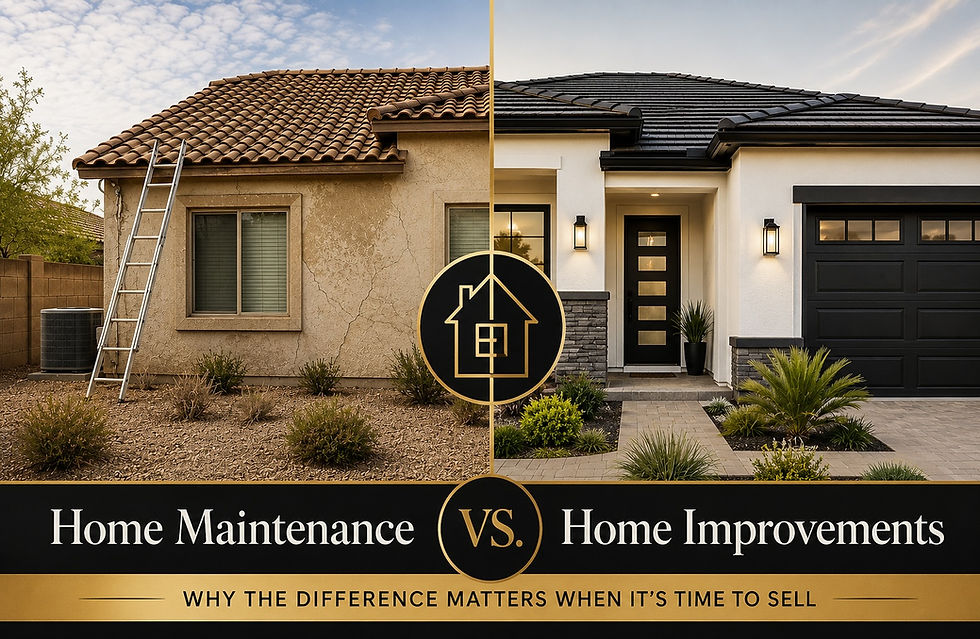
If another home offers:
Updated kitchens
Modern bathrooms
Fresh paint
New flooring
Better landscaping
New HVAC
A newer roof
...for the same price, yours may quickly become overlooked.
That's not personal. It's simply how buyers shop.
Overpricing Can Cost You More

Many sellers believe they can "leave room to negotiate." The problem is buyers often never schedule a showing. Overpriced homes generate fewer showings. Fewer showings create fewer offers. The longer a home sits, the more buyers begin asking:
"What's wrong with it?"
Eventually, price reductions become necessary. Ironically, many overpriced homes end up selling for less than they likely would have if they had been priced correctly from the beginning.
Pricing Isn't About Winning an Argument
Sometimes homeowners want to "test the market." The market always answers.
Unfortunately, it doesn't always answer kindly.
The best pricing strategy isn't based on:
What you paid
What you need to make
What Zillow estimates
What your neighbor hopes to get
It's based on what qualified buyers are willing to pay today.
The Croft Advantage™
At Croft N Croft Real Estate Concierges, pricing isn't guesswork.
We combine current market data with Benjamin Croft's construction knowledge and Jan Croft's marketing expertise to position homes competitively from day one.
We also evaluate how your home's condition compares with competing properties.
Sometimes a few strategic improvements can justify a higher asking price.
Other times, honest pricing produces stronger buyer interest, multiple offers, and a better final sales price.
The Bottom Line
Every homeowner wants to maximize their investment. So do we.
But maximizing value doesn't happen by choosing the highest number.
It happens by understanding today's market, presenting your home at its best, and pricing it where buyers see genuine value. That's how homes sell.
And that's how sellers often achieve the strongest possible outcome.
If you're wondering what your home is really worth—not what someone hopes it's worth—we'd be happy to provide an honest, professional evaluation
based on today's market conditions.


Comments